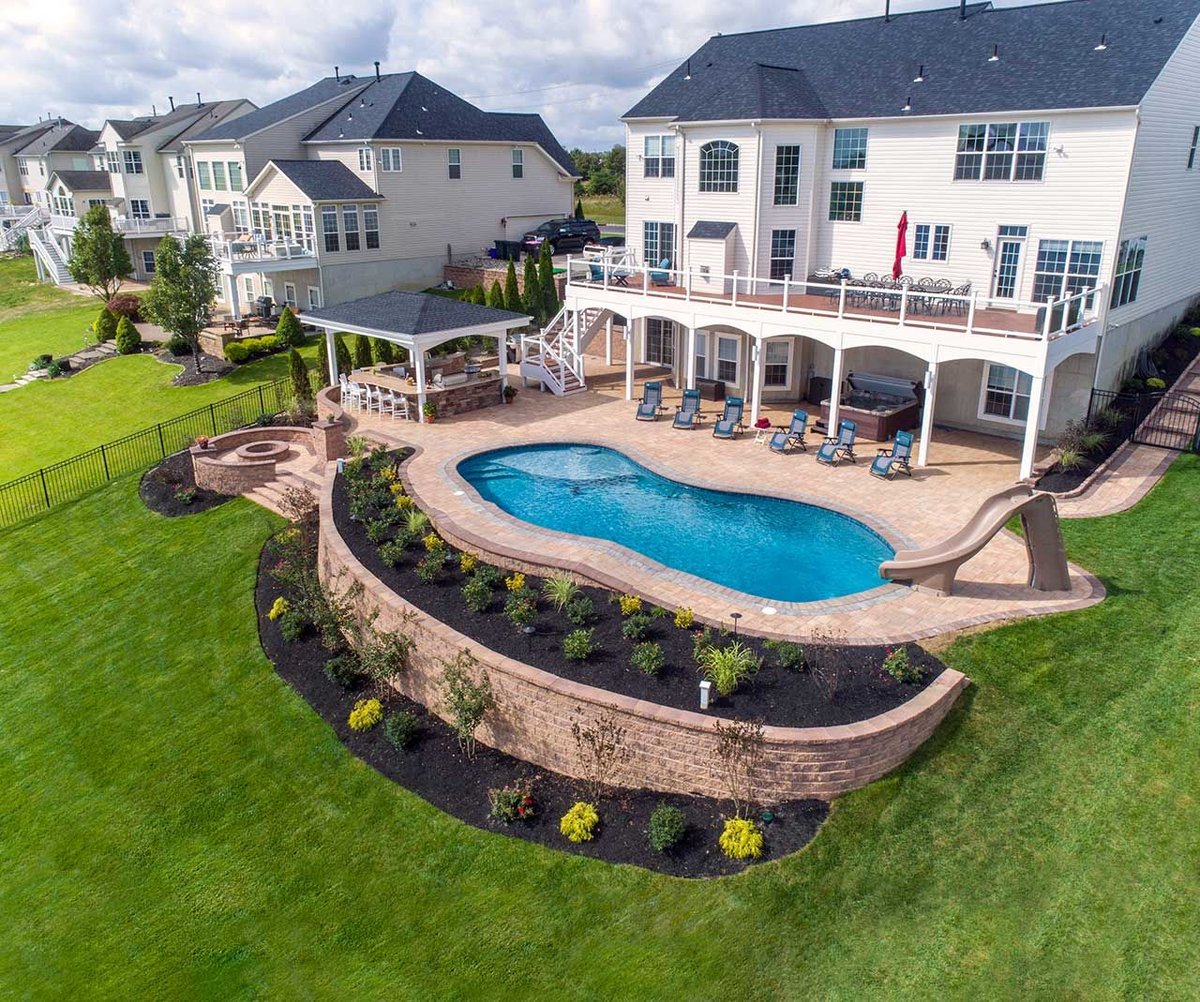
Picture this: you've always wanted a sparkling inground pool in your backyard, but your yard slopes like a gentle hillside. It's a common scenario that many homeowners face. What if we told you that building your dream pool on uneven terrain isn't just possible—it's actually quite manageable? This guide will walk you through everything from initial planning to final installation, showing how to work with your landscape rather than against it.
Let's be honest—most of us have imagined having a beautiful inground pool in our backyard. But when you look out at your property and see that lovely slope, you might feel a little discouraged. That feeling of 'this is impossible' is completely normal. Many people assume that a sloped yard makes pool installation impossible or way too expensive. But here's the truth: with proper planning and the right approach, you can absolutely build your dream pool even when Mother Nature gave you a hillside instead of flat ground. The key lies in understanding how to work with the land around you.
Understanding Your Slope
Before diving into any construction plans, you must thoroughly evaluate your yard's slope. This isn't just about measuring how steep it is—it's about understanding how that slope affects water drainage, structural stability, and overall pool design. Start by identifying the direction of the slope. Is it running along the length of your property or across it? Knowing this helps determine where your pool should go and how much excavation you'll need to do.
Consider getting a professional survey done. These experts can map out exactly how much elevation changes occur across your space. You might be surprised to find that what looks like one big slope is actually several smaller inclines that can be worked with more effectively.
The steepest part of your slope matters most. If it's near where you want to place your pool, you'll need to plan accordingly. A 10-degree slope might be manageable, but a 30-degree incline will require different strategies entirely. Sometimes, a slight grade can actually be beneficial for drainage around the pool area.
Planning Your Pool Layout
Once you understand your terrain, it's time to plan where exactly your pool will go. This is where creativity meets practicality. You might think you need to build your pool perfectly level, but that's not always necessary. Many modern pools are designed to accommodate some degree of slope.
Think about how the slope affects your view and access points. If your yard slopes downward toward the street, maybe placing the pool higher up gives you better views of your neighborhood. Or perhaps a lower placement allows for easier access from the house.
Key considerations include:
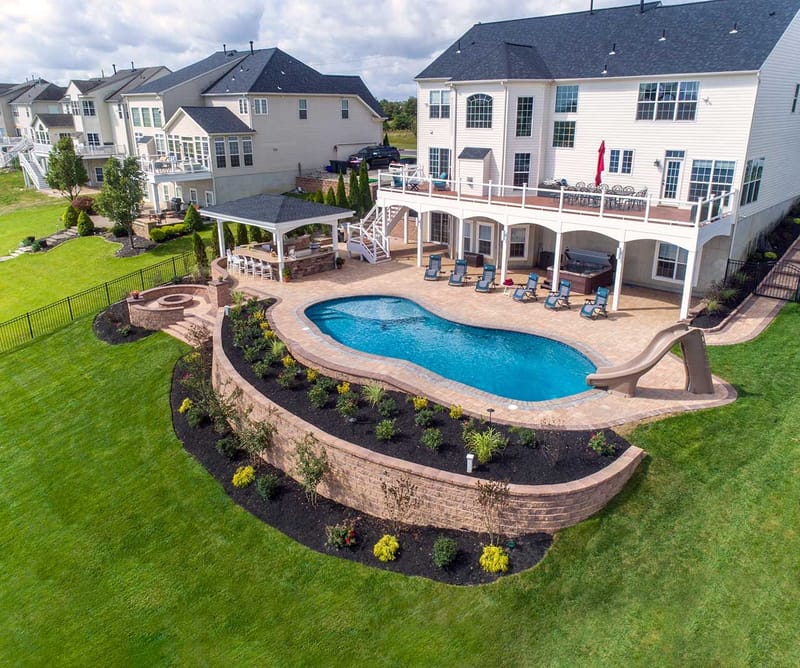
Sometimes, the most creative solutions involve using the slope to your advantage. A pool that sits slightly lower on one side can create natural seating areas or even a waterfall effect that works beautifully with the existing topography.
Excavation Techniques for Slopes
Excavating a pool in a sloped yard requires special techniques that differ significantly from flat ground projects. The main challenge here is maintaining the structural integrity of both the pool and surrounding soil.
Start with careful planning of your excavation. You'll likely need to create terraces or stepped levels to make the process safer and more efficient. This means cutting away soil in stages rather than removing everything at once.
Here's where things get interesting: you might actually want to leave some soil in place to act as support. Sometimes, strategic removal creates natural retaining walls that help stabilize the area.
Professional excavators know how to handle these situations. They use specialized equipment to ensure they don't over-dig in certain spots while properly preparing others. The goal is creating a stable foundation that won't shift or settle over time.
Don't forget about the drainage system during excavation. Water naturally flows downhill, so you need to account for this before you start digging. Proper planning prevents costly mistakes later on.
Structural Considerations
When dealing with sloped ground, structural integrity becomes even more crucial. The pool itself must be built to withstand the pressure from uneven soil conditions. This means working with engineers who understand how to adapt standard pool designs for challenging terrain.
Some pool types handle slopes better than others. Fiberglass pools, for example, often work well in sloped areas because they're manufactured to fit various shapes. Concrete pools offer more flexibility in terms of customization but require more careful planning.
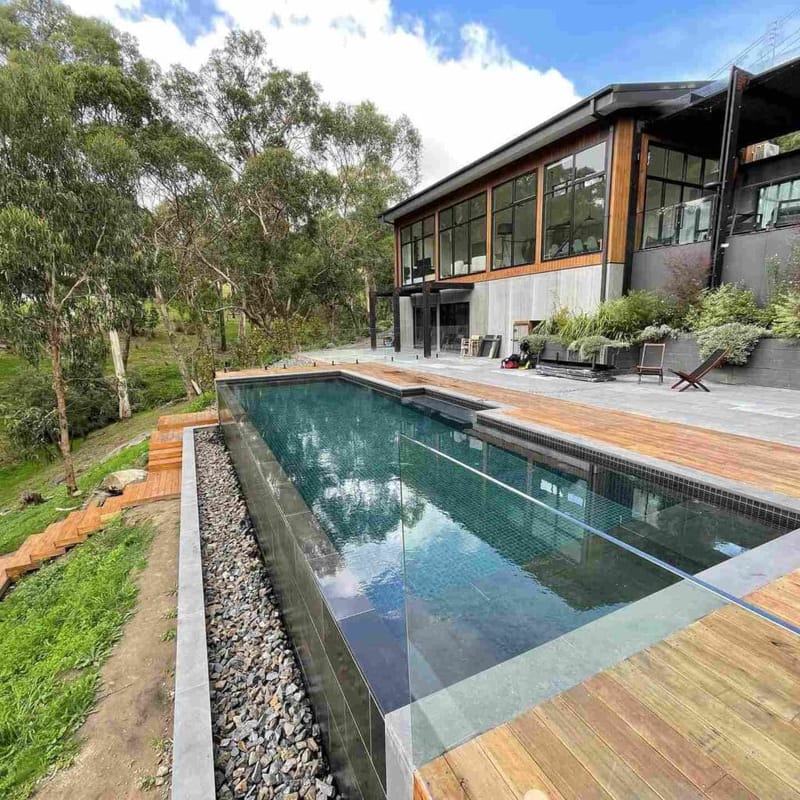
Retaining walls may be necessary to hold back soil and create level areas for your pool. These aren't just decorative—they serve important functional purposes.
The foundation also plays a major role. Some installations use reinforced concrete footings that distribute weight evenly across uneven surfaces. Others rely on specialized anchoring systems that prevent shifting.
It's worth noting that some slopes may require additional reinforcement or special materials. Always consult with professionals who have experience in sloped installations.
Drainage Solutions
Water management becomes critical when you're working with sloped yards. Without proper drainage, you could end up with pooling water around your pool, erosion issues, or even structural problems.
Start by understanding where water naturally flows on your property. Rainwater typically follows the path of least resistance, which is usually downhill. So you'll want to direct this flow away from your pool area.
Installing proper drainage channels or French drains can solve many potential problems. These systems move water efficiently away from your pool structure. You might also consider creating swales—shallow ditches that redirect water along the slope.
Another important factor is ensuring your pool deck area stays dry. This often involves designing a slight slope away from the pool itself. Even a small grade can make a big difference in preventing water accumulation.
Think about the long-term impact of your drainage choices. A poorly planned system can cause problems for years to come, affecting not just your pool but your entire landscape.
Cost Implications and Budget Planning
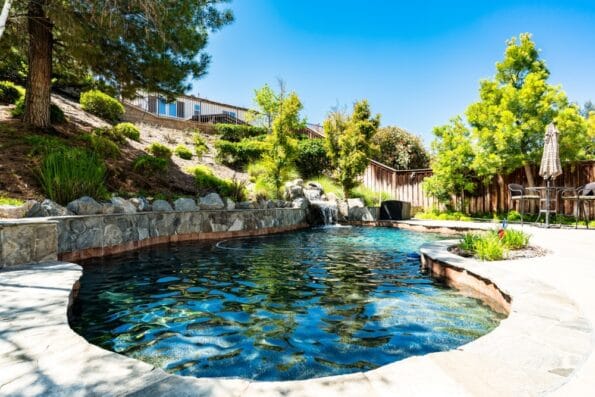
Let's talk money—the elephant in the room that everyone wants to discuss. Installing a pool in a sloped yard can cost more than a flat-ground project, but it's not necessarily double or triple the price. The actual cost depends heavily on the extent of the slope and how much work is required.
Typical cost increases range from 10% to 30% over standard installations. This happens because of extra excavation work, potential retaining wall construction, and possibly modified pool designs.
Budget wisely by including contingency funds. Sloped installations often reveal unexpected challenges that require adjustments to the original plan. Having a buffer in your budget saves you from stress later.
Consider timing factors too. If you're doing this during the rainy season, expect delays and potentially higher costs due to weather-related complications.
Some homeowners find that their investment pays off quickly. A well-planned sloped pool installation can actually increase property value. Plus, you're creating a unique feature that sets your home apart from neighbors with standard pools.
Professional Help vs. DIY Approaches
This is where many people get confused. While some aspects of pool installation seem simple enough to tackle yourself, a sloped yard brings complexity that often makes professional help essential.
DIY enthusiasts might be tempted to handle all aspects themselves, but this approach carries significant risks. Sloped ground requires precise measurements and careful execution that professionals are trained to handle.
When you hire experienced contractors, you're paying for their knowledge and expertise. They understand local codes, soil conditions, and what works best for your specific situation.
Many pool companies specialize in sloped installations. They bring equipment and experience that simply aren't available to homeowners. Their track record with similar projects provides confidence that your installation will succeed.
There are exceptions, though. If you have experience with construction and the slope is relatively mild, you might consider a hybrid approach. You could handle simpler tasks while leaving the complex work to pros. Just remember that safety should always come first when dealing with heavy machinery and structural elements.
Real-Life Examples and Success Stories
Don't just take our word for it—here are some real examples of successful sloped pool installations that prove it's definitely possible.
One family had a yard that dropped about eight feet over thirty feet. Rather than giving up on their pool dreams, they worked with a designer who created a tiered pool system. The result was stunning—a series of levels that followed the natural slope of their property.
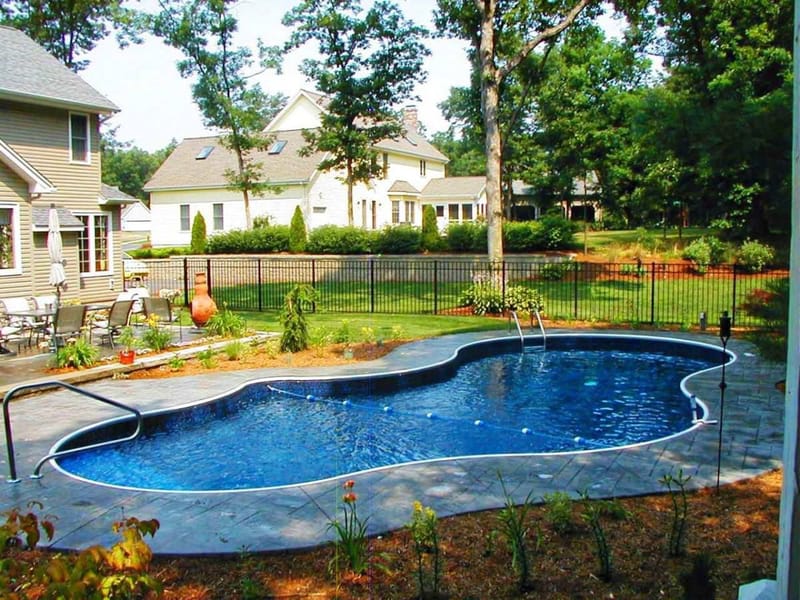
Another homeowner faced a different challenge: a yard that gradually rose from front to back. They chose a curved pool design that matched the gentle incline. The finished product looked like it had always been there, seamlessly blending with the landscape.
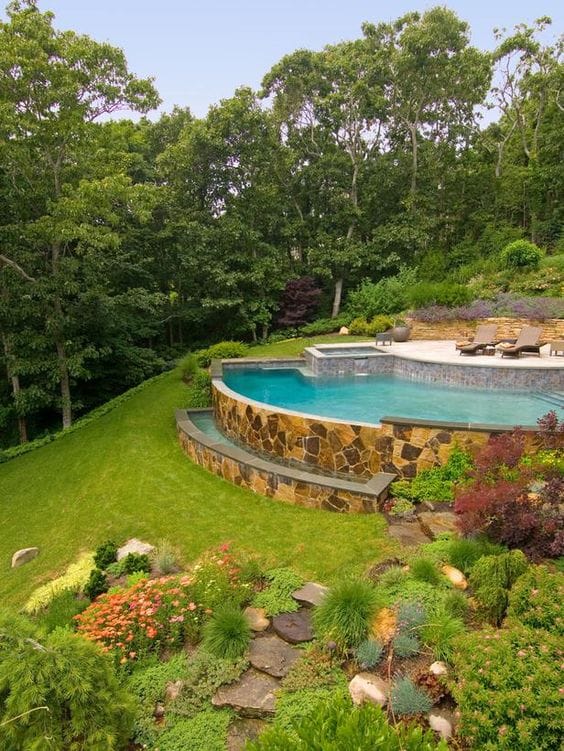
A third case involved a pool built on a steep hillside. The solution? Building a retaining wall that doubled as a decorative feature. The wall became part of the aesthetic design, providing both function and beauty.
These stories show that creativity and proper planning can turn challenges into opportunities. Every slope presents unique possibilities, and skilled professionals know how to maximize them.
Maintenance and Long-Term Care
Once your pool is installed, ongoing maintenance becomes even more important with sloped yards. The unique conditions mean you'll face different challenges than homeowners with flat properties.
Regular inspections are crucial. Check for signs of erosion around the pool perimeter. Watch for settling or shifting that might affect the pool's structure.
Related Posts

Unveiling the Timeless Charm of Black and White Striped Patio Um

Unpacking the Truth About Walking on Pool Covers Your Essential

Mastering the Art of the Perfect Pool Party Experience A Guest's Guide

Understanding the Pink Slime in Your Pool What It Is and How to Tackle It

Keeping Your Concrete Patio Happy and Safe Around the Fire Pit

Transforming Your Corner Lot A Masterclass in Curb Appeal
Drainage systems require attention too. Clear debris from drainage channels regularly to keep water flowing properly. A clogged drain can cause serious problems during heavy rains.
Weather conditions also play a role. In areas with freeze-thaw cycles, the expansion and contraction of soil can affect pool stability. Proper winterization becomes even more critical.
Consider seasonal changes in your yard. The slope might cause different water patterns throughout the year. Adjust your maintenance routine accordingly to protect your investment.
Final Thoughts on Sloped Pool Installation
So what's the bottom line? Installing an inground pool in a sloped yard isn't just possible—it can be incredibly rewarding. The key is approaching it with realistic expectations, proper planning, and professional guidance when needed.
Don't let the word 'slope' discourage you from pursuing your pool dreams. With the right strategy, your unique landscape can become the highlight of your outdoor space.
Remember that every challenge comes with its own set of solutions. The natural contours of your yard might even enhance your pool's appeal. Whether you choose to work with professionals or attempt some DIY elements, make sure you're fully informed about what's involved.
Your dream pool isn't just about having a swimming area—it's about creating a space that reflects your personality and fits perfectly with your environment. With thoughtful planning and the right team, that dream can become reality, even on the most challenging terrain.
Building an inground pool in a sloped yard requires more thought and planning than a standard installation, but it's certainly achievable. The key is understanding your specific situation, working with professionals who have experience in sloped installations, and being prepared for some additional considerations. Whether you're dealing with a gentle incline or a dramatic drop-off, there are solutions that can work beautifully.
Don't let the idea of a sloped yard stop you from enjoying the benefits of having a pool. With proper preparation and the right approach, you can create a stunning outdoor oasis that enhances your property rather than fighting against it. The investment in time and resources will pay dividends in enjoyment and property value.
Your unique landscape can become your greatest asset when it comes to pool design. Embrace the challenge, and let your imagination run wild with possibilities. After all, some of the most beautiful pools are those that work harmoniously with their surroundings rather than ignoring them.
