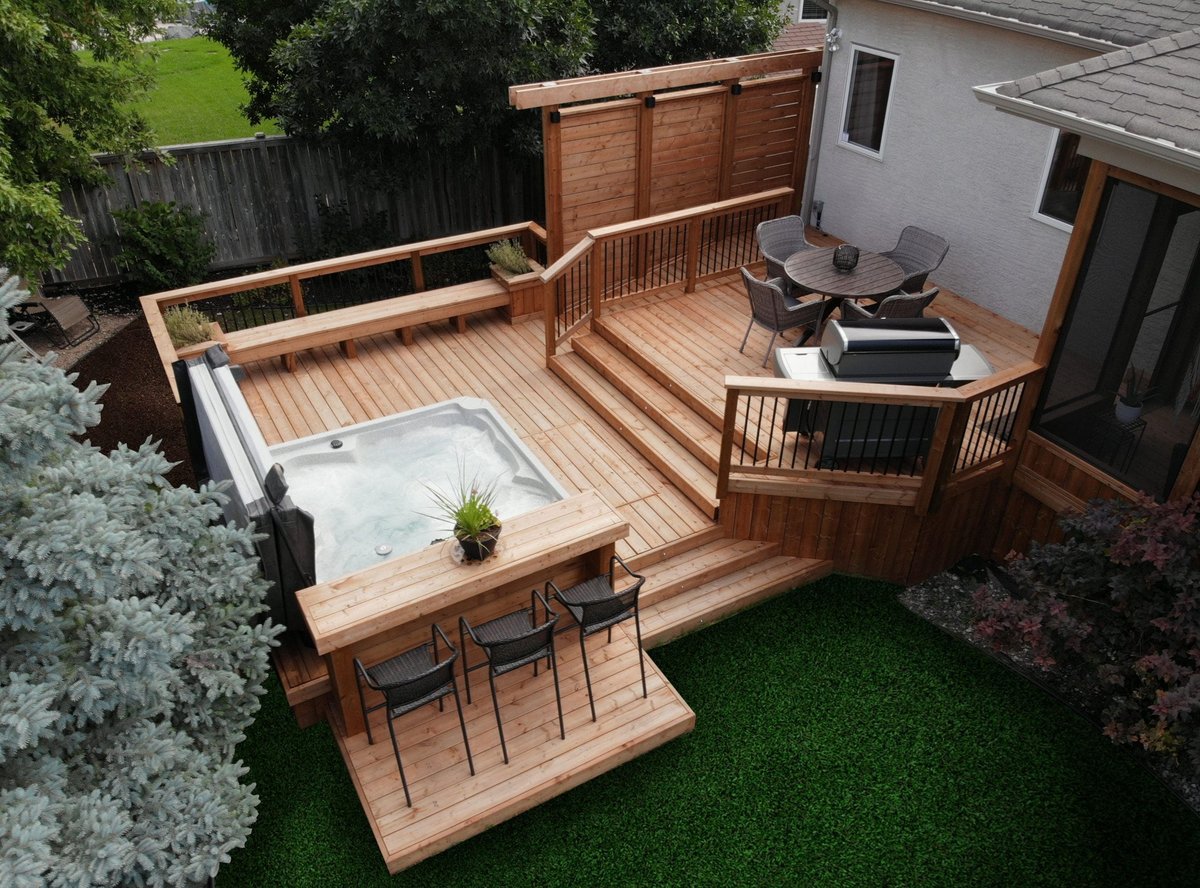
Picture this: you're relaxing on your custom-designed deck, the warm glow of your hot tub creating a cozy ambiance, while the gentle sound of water provides the perfect soundtrack. This isn't just a fantasy - it's an achievable reality when you understand how to properly plan and design your outdoor living space around a hot tub.
When you think about creating the ultimate outdoor experience, few elements bring together comfort, relaxation, and social gathering like a well-planned hot tub setup. But designing a deck that truly complements and enhances your hot tub requires more than just placing a few chairs around the tub. It's about understanding spatial relationships, safety considerations, and aesthetic harmony. Whether you're building a new home or renovating your existing space, thoughtful deck design around a hot tub can elevate your outdoor living to new heights.
Understanding Hot Tub Placement Requirements
Before you even sketch out your deck plans, you must understand what your hot tub needs to function properly. The first rule is maintaining adequate clearance around the unit. Most manufacturers recommend at least 18 inches of clear space on all sides, though some models may require more. Think about this as creating breathing room for the equipment - you don't want anything blocking access to controls, filters, or maintenance areas.
The ground beneath your hot tub is equally important. You'll need a solid, level foundation that can support the weight of the tub when filled with water and people. Concrete pads or reinforced deck surfaces work best. Consider the drainage requirements too - your hot tub will need proper water runoff to prevent pooling around the base.
Another crucial factor is electrical needs. Most hot tubs require dedicated 240-volt circuits, typically 30-50 amp service. Plan your electrical routing early, as running new lines can add significant cost to your project. The location of your hot tub should also consider access points for delivery, maintenance, and seasonal winterization.
Safety First: Essential Design Considerations
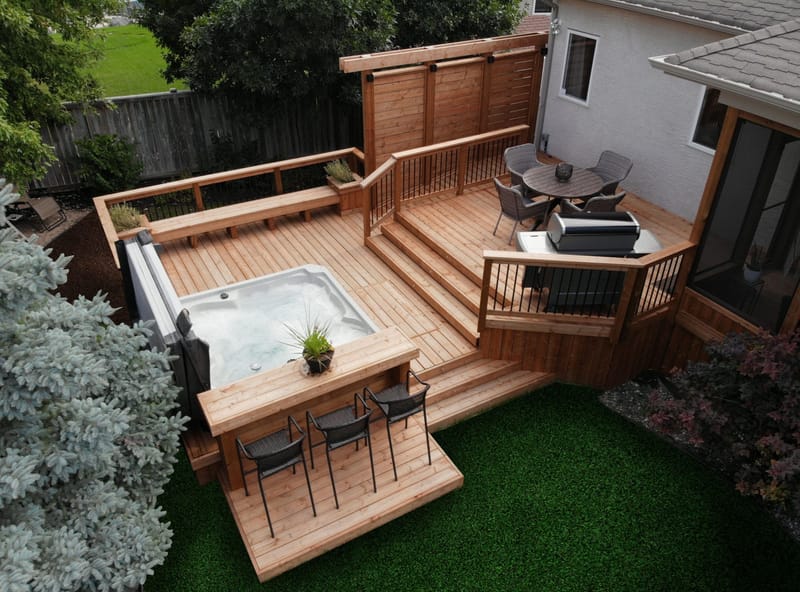
Safety should always come before aesthetics when designing around a hot tub. The most critical element is slip prevention. Wet surfaces near water features are dangerous, especially for elderly family members or young children. Install non-slip materials throughout the hot tub area, including deck surfaces and steps leading to the tub.
Fencing is another vital component. Many local codes require barriers around hot tubs, particularly if they're accessible to children. These barriers typically need to be at least 4 feet high and include secure gates. Consider how these fencing requirements affect your overall deck design and whether you want to incorporate them into your aesthetic vision.
Lighting plays a dual role in safety and ambiance. Under-deck lighting, pathway lights, and ambient fixtures create both security and atmosphere. However, avoid glare from lights positioned directly above the hot tub, as this can cause discomfort for users.
Finally, think about accessibility. If anyone in your household has mobility issues, ensure there are no step obstacles between the deck and hot tub entrance. Ramps or gradual transitions might be necessary for everyone to enjoy the space comfortably.
Creating Functional Zones on Your Deck
A well-designed deck with hot tub isn't just one big area - it's a collection of functional spaces that work together. Start by defining distinct zones that serve different purposes. The primary zone centers around the hot tub itself, designed for relaxation and socializing. This area might include comfortable seating arrangements, perhaps a small table for drinks or snacks.
Consider adding a secondary zone for dining or casual conversation. This could be a separate seating area away from the immediate hot tub zone, allowing guests to interact without being too close to the heat and steam. Some homeowners prefer to have their dining area on the opposite side of the deck from the hot tub.
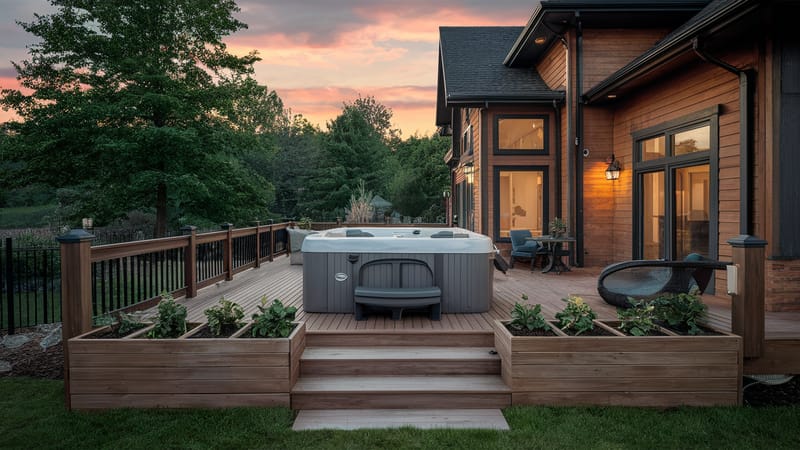
Storage areas are often overlooked but essential. You'll want somewhere to keep pool supplies, cleaning materials, and seasonal items. Built-in storage or cabinets can blend seamlessly into the deck design while keeping everything organized and out of sight.
Don't forget about privacy. Depending on your location and neighbors, you might want to incorporate screening options such as planters, trellises, or even a partial wall to create a sense of seclusion. This can make your hot tub area feel more exclusive and private.
Material Selection and Durability Factors
Choosing the right materials for your hot tub deck is crucial for both appearance and longevity. Wood remains popular for its natural warmth and classic look, but it requires regular maintenance to resist weather damage and fading. Cedar and redwood are excellent choices for decks because they naturally resist insects and decay, though they still need periodic sealing.
Composite decking has gained popularity due to its low maintenance requirements and resistance to rot and insects. These materials are engineered to withstand moisture and temperature changes better than traditional wood. They also offer consistent color and texture without the need for staining or painting.
For areas around the hot tub specifically, consider materials that won't become dangerously slippery when wet. Concrete pavers or specially treated lumber work well for walkways and platform areas. The key is selecting materials that provide good traction even when wet.
Weather resistance matters enormously when choosing materials. The hot tub area experiences constant moisture from steam and splashing water, plus direct exposure to sun and rain. Materials that handle these conditions well will last longer and maintain their appearance better over time.
Planning Your Layout and Flow
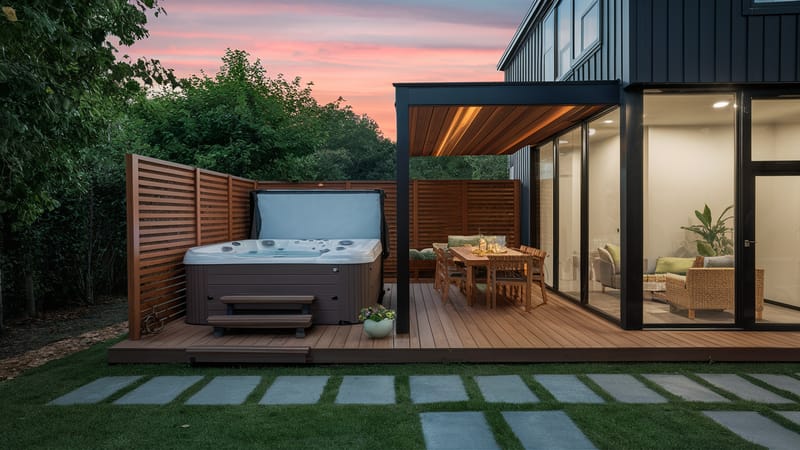
The layout of your deck determines how easily people can move through the space and how well different areas function together. Start by mapping out your hot tub placement first, then build the rest of your deck design around it. Consider the direction your hot tub faces - does it get morning sun or afternoon shade? This affects both comfort and energy costs.
Think about traffic flow. People need to move freely between the hot tub, dining area, and any other zones. Plan pathways that allow easy access to all parts of your deck without forcing people to navigate around furniture or obstacles.
The relationship between your deck and surrounding landscape is also important. If you have trees nearby, consider how their branches might affect the space during different seasons. Do you want to maximize shade or sunlight in certain areas? How does the view from your deck change with the seasons?
Another practical consideration is how you'll access the hot tub from the deck. Will you need a step or ramp? Is there enough clearance for someone to safely enter and exit the tub? These details matter more than you might expect when planning your overall design.
Integration with Outdoor Living Features
Modern outdoor living spaces often combine multiple elements to create a cohesive experience. Your hot tub deck should consider how it fits within the broader outdoor environment. A fire pit area adjacent to the hot tub creates a wonderful contrast of heat and coolness, providing additional year-round usability.
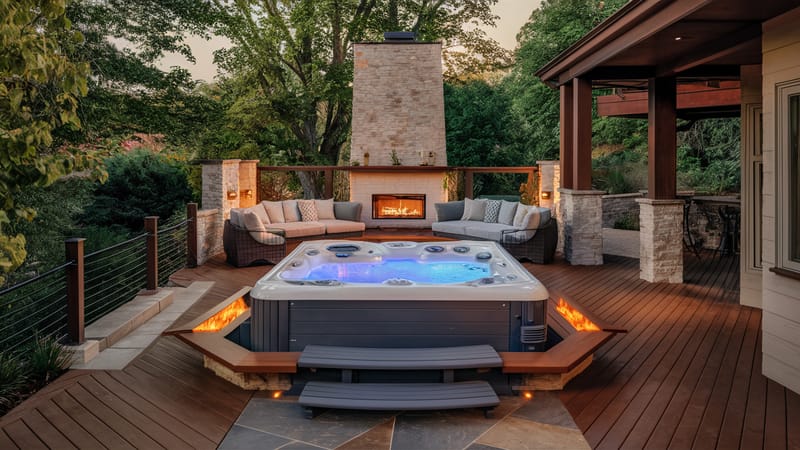
Consider incorporating outdoor kitchen features nearby. Having a grill or prep area close to your hot tub makes entertaining easier. You can cook meals while relaxing in the tub or vice versa. The key is ensuring these features don't interfere with each other's functionality.
Water features beyond the hot tub can enhance the entire space. A small fountain or decorative water element adds visual interest and creates a calming sound environment. Just be mindful of how these features interact with your hot tub's electrical systems and drainage.
Lighting is another important integration point. LED strips under deck railings, spotlights on trees, and ambient fixtures create layers of illumination that make your space beautiful after dark. Strategic lighting can highlight architectural features, define zones, and ensure safe navigation.
Don't overlook the importance of seasonality. What happens to your deck when temperatures drop? Can you use the space year-round, or do you need to plan for seasonal closure? This affects everything from material selection to storage solutions.
Budget Planning and Cost Considerations
Designing a deck with hot tub involves several financial considerations that can vary significantly based on your specific situation. The initial investment includes materials, labor, and permits. Basic deck construction starts around $15-25 per square foot, but premium materials and complex designs can push costs much higher.
Hot tub installation adds another layer of expense. Quality units range from $3,000-$15,000 depending on size, features, and brand. Don't forget ongoing costs like electricity, maintenance, and potential repairs. A typical hot tub uses about 1,500-3,000 watts of power, which translates to roughly $100-200 monthly electricity costs.
Related Posts

Unveiling the Timeless Charm of Black and White Striped Patio Um

Unpacking the Truth About Walking on Pool Covers Your Essential

Mastering the Art of the Perfect Pool Party Experience A Guest's Guide

Understanding the Pink Slime in Your Pool What It Is and How to Tackle It

Keeping Your Concrete Patio Happy and Safe Around the Fire Pit

Transforming Your Corner Lot A Masterclass in Curb Appeal
Permits and inspections are often overlooked but necessary expenses. Many municipalities require permits for deck construction and hot tub installation, with fees ranging from $100-$500. These regulations exist to ensure safety and code compliance.
Professional services can add significant value but also increase costs. Hiring experienced contractors for both deck construction and hot tub installation ensures quality workmanship and proper installation. However, DIY projects can save money if you have the skills and time available.
Consider timing your project carefully. Weather conditions affect construction timelines and costs. Summer months might mean higher contractor rates, while winter installations can be more economical but slower due to weather restrictions.
Maintenance and Longevity Strategies
Once your deck with hot tub is complete, proper maintenance becomes essential for preserving both beauty and functionality. Regular cleaning prevents buildup of dirt, debris, and potentially damaging substances that accumulate from the hot tub environment.
Wood decks require periodic sealing and staining to protect against weather damage. Check annually for signs of wear, rot, or insect damage. Early detection prevents costly repairs later.
Hot tub maintenance includes regular water testing, cleaning, and filter replacement. Most hot tubs need professional servicing twice per year to ensure optimal performance and safety.
Deck surfaces should be cleaned regularly with appropriate products for the material type. Avoid harsh chemicals that might damage finishes or create slip hazards.
Seasonal preparation is crucial. Before winter arrives, properly winterize your hot tub according to manufacturer instructions. Remove and store any items that might be damaged by freezing temperatures.
Keep detailed records of all maintenance activities, repairs, and replacements. This documentation helps with future planning and can be valuable if you ever decide to sell your property.
Designing a deck that perfectly complements a hot tub is both an art and a science. It requires careful planning, attention to safety, and consideration of practical needs alongside aesthetic desires. When done right, the result is a space that enhances your lifestyle, provides years of enjoyment, and potentially increases your home's value. The key is starting with clear goals, understanding the technical requirements, and working with professionals who understand both deck construction and hot tub installation. Remember, the best outdoor spaces aren't just about what looks good - they're about creating environments where you actually want to spend time. Your hot tub deck should invite relaxation, encourage social interaction, and provide a sanctuary from daily stress. With thoughtful planning and quality execution, your dream outdoor oasis is well within reach.
