
When you think about outdoor kitchens, the counter often gets overlooked. But this crucial element sets the foundation for everything else. The depth of your outdoor kitchen counter isn't just a number on a blueprint – it's a game-changer for functionality, comfort, and overall enjoyment of your outdoor cooking space.
Outdoor kitchens have transformed from simple backyard setups into sophisticated culinary spaces that extend living areas into the great outdoors. Every detail matters when designing these spaces, and one of the most critical measurements is the depth of your outdoor kitchen counter. This dimension affects how easily you can prep food, store equipment, and move around your workspace. It's not just about having enough room – it's about creating a space that feels right for your cooking style and lifestyle. Whether you're planning a new outdoor kitchen or updating an existing one, understanding counter depth becomes essential. The right measurement can make your outdoor cooking experience seamless, while the wrong one might lead to frustratingly cramped conditions or inefficient use of space.
Standard Outdoor Counter Depths Explained
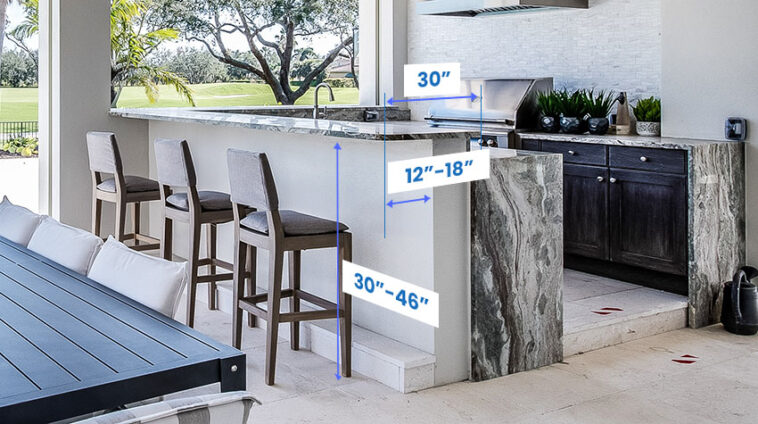
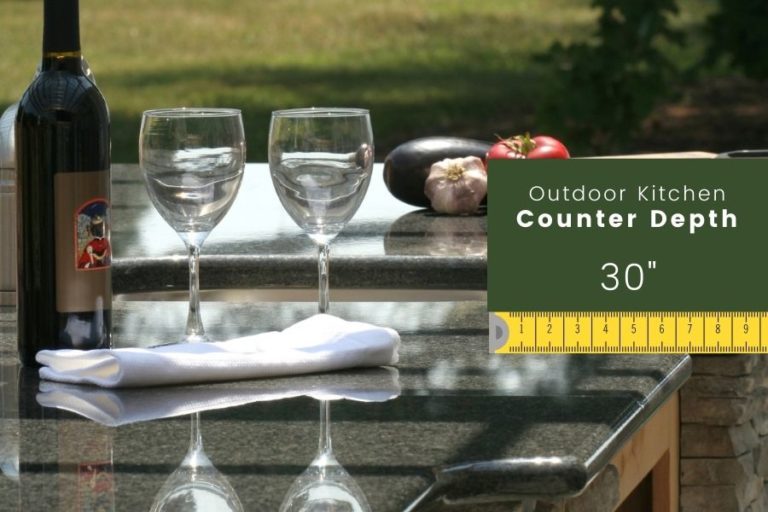
Most outdoor kitchen counters follow established standards that balance functionality with practicality. The typical range falls between 24 and 30 inches deep. This measurement refers to the distance from the front edge to the back edge of the counter surface. Think about it like this – if you're standing at the counter, how much space do you need to comfortably work with ingredients and tools? Most professional designers recommend a minimum of 24 inches, especially for areas where you'll be doing substantial prep work. But what happens when you go beyond that? Going deeper than 30 inches provides more storage space and room for appliances, but it can also create challenges for people with shorter stature or those who prefer working closer to their food. The standard depths vary based on the counter's intended use. For example, prep counters might benefit from slightly more depth to accommodate cutting boards and ingredients, while serving counters might be designed differently to allow easy access to guests.
How Counter Depth Affects Workflow
The depth of your outdoor kitchen counter directly impacts your cooking efficiency and comfort. When you're chopping vegetables or mixing ingredients, you need adequate space to work without feeling cramped. Imagine trying to slice potatoes on a counter that's only 18 inches deep – it's going to be challenging to maneuver your knife and keep ingredients within reach. On the flip side, a counter that's too deep can make it difficult to see what you're doing, especially when working with tall appliances or multiple items at once. The sweet spot usually allows for comfortable arm movement while maintaining visibility of your workspace. Consider how you typically work – do you prefer to work close to your ingredients, or do you like more space to spread out tools and materials? Your answer will help determine the ideal depth for your setup. Many successful outdoor kitchens incorporate different counter depths for different functions. For instance, you might have a shallower prep area near the sink and a deeper cooking area with more storage.
Design Considerations for Different Spaces
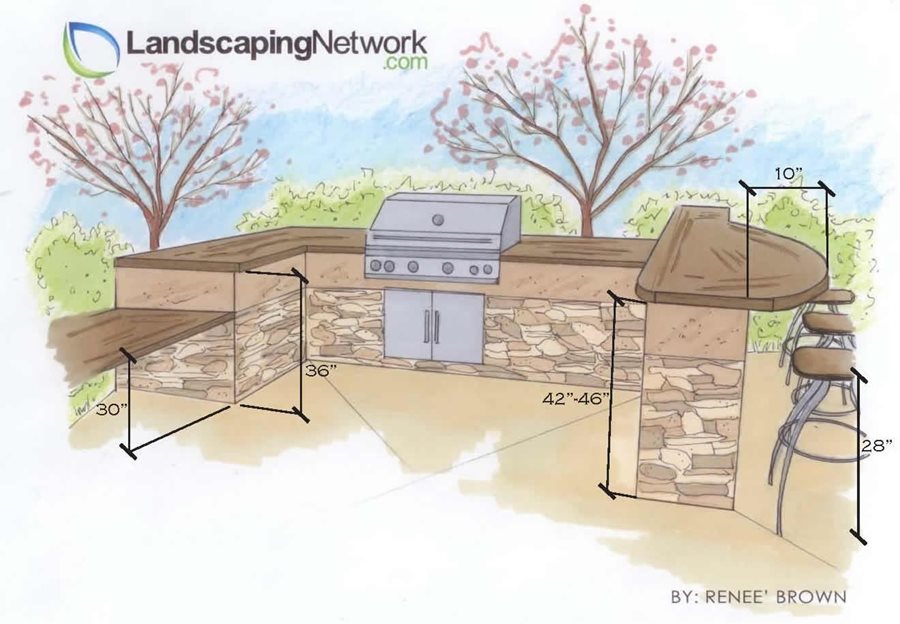
Outdoor kitchen counter depth varies significantly depending on the available space and layout. In smaller backyards or urban settings, every inch counts. Here, a counter that's 24 inches deep might be the perfect compromise between functionality and space-saving. You'll want to maximize every square foot while ensuring there's still room for movement and equipment. Larger spaces offer more flexibility. You can experiment with deeper counters, perhaps up to 36 inches, to accommodate more storage or specialized equipment. The shape of your outdoor kitchen also plays a role. A straight-line counter might require a different approach than a U-shaped or L-shaped design. The corners of your outdoor kitchen often present unique challenges when it comes to counter depth. How do you handle the transition from a shallow prep area to a deeper cooking zone? These transitions need careful consideration to avoid awkward gaps or uncomfortable working spaces. Some designers suggest incorporating angled sections or varying depths to create visual interest while maintaining usability.
Material Matters: How Depth Impacts Different Surfaces
Not all materials behave the same way when it comes to counter depth. Natural stone countertops, like granite or slate, tend to look more substantial when they're deeper. The extra depth helps support the weight of heavy appliances and gives the counter a more robust appearance. Concrete countertops offer similar benefits and can be shaped to accommodate various depths without compromising structural integrity. For lighter materials such as composite or laminate, the depth becomes more about the perceived space rather than actual weight capacity. These materials often work well in shallower configurations because they're easier to install and maintain. When choosing materials, consider both aesthetics and function. A 30-inch deep counter made of lightweight materials might not provide the same visual impact as a 24-inch deep counter made of heavy stone. However, it could be more practical for certain installations. The material choice also affects how the counter integrates with surrounding elements like cabinets, appliances, and seating areas.
Practical Tips for Measuring and Planning
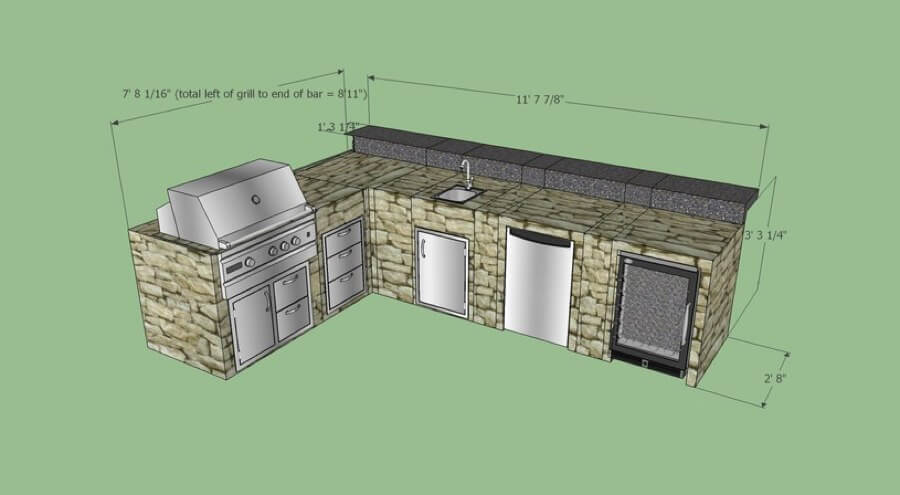
Measuring for outdoor kitchen counter depth requires more than just a tape measure. Start by considering your users – what are their heights, arm lengths, and preferences? A person who's 5'6" will have different needs than someone who's 6'2". Think about the activities that will take place at each counter area. Will you be doing extensive prep work? Do you need space for multiple people to work simultaneously? The standard recommendation is to have at least 24 inches of depth for general use, but you might want to add 2-4 inches for additional comfort. Always measure from the front edge to the back edge, including any overhangs or extensions. Some outdoor kitchens feature counters that extend slightly beyond the main structure. These overhangs can affect how you calculate usable depth. Don't forget to account for clearance around the counter. You'll need space for people to move behind and around the counter, so factor in at least 18 inches of clearance on each side. Consider also the height of your counter – this works hand-in-hand with depth to create optimal working conditions.
Real-World Examples and Case Studies
Let's look at some practical examples to understand how counter depth affects real outdoor kitchens. One homeowner in California had a small backyard but wanted a fully functional outdoor kitchen. They chose 24-inch deep counters to maximize space while keeping things manageable. The result was a kitchen that felt spacious despite its compact size. Another family with a large backyard opted for 30-inch deep counters to accommodate their extensive cooking needs and multiple appliances. Their kitchen became a hub for entertaining, with plenty of room for prep work and serving. In a recent renovation project, a designer worked with a client who preferred working very close to their food. They installed 20-inch deep counters in the prep area, which created a more intimate cooking environment. The key takeaway from these examples is that there's no one-size-fits-all solution. What works for one family might not work for another. The best approach is to consider your specific lifestyle, space constraints, and cooking habits. Professional designers often recommend starting with a base measurement and then adjusting based on testing and feedback during installation.
The depth of your outdoor kitchen counter might seem like a small detail, but it has far-reaching implications for your entire cooking experience. From ensuring comfortable workflow to maximizing space efficiency, every inch matters. Remember that the right depth depends on your personal needs, the size of your outdoor space, and how you plan to use your kitchen. Whether you choose a standard 24-inch depth or something more substantial, the key is to make thoughtful decisions based on your actual usage patterns. Don't let the measurement intimidate you – it's simply a tool to help create the perfect outdoor cooking environment. Take time to visualize how you'll actually use the space, consider your physical dimensions, and don't be afraid to experiment with different depths. Your future self, who will be enjoying countless meals in this beautiful space, will thank you for making smart choices about counter depth.


