
When you're shopping for a two-bedroom condo, the layout matters more than you might think. It's not just about having enough bedrooms - it's about creating a space that feels lived-in, functional, and uniquely yours. Whether you're a first-time buyer, a growing family, or someone looking to maximize their urban living experience, understanding how to approach condo floor plans can make all the difference.
Living in a two-bedroom condo means embracing compact living with intention and creativity. These spaces demand smart planning, strategic design choices, and often some compromises. But that doesn't mean you have to sacrifice comfort or style. In fact, with the right approach to floor planning, a two-bedroom condo can feel spacious, welcoming, and perfectly suited to your lifestyle. The key lies in understanding how to work with the available square footage, considering traffic flow, maximizing storage solutions, and creating distinct zones within your limited area.
Understanding Space Constraints
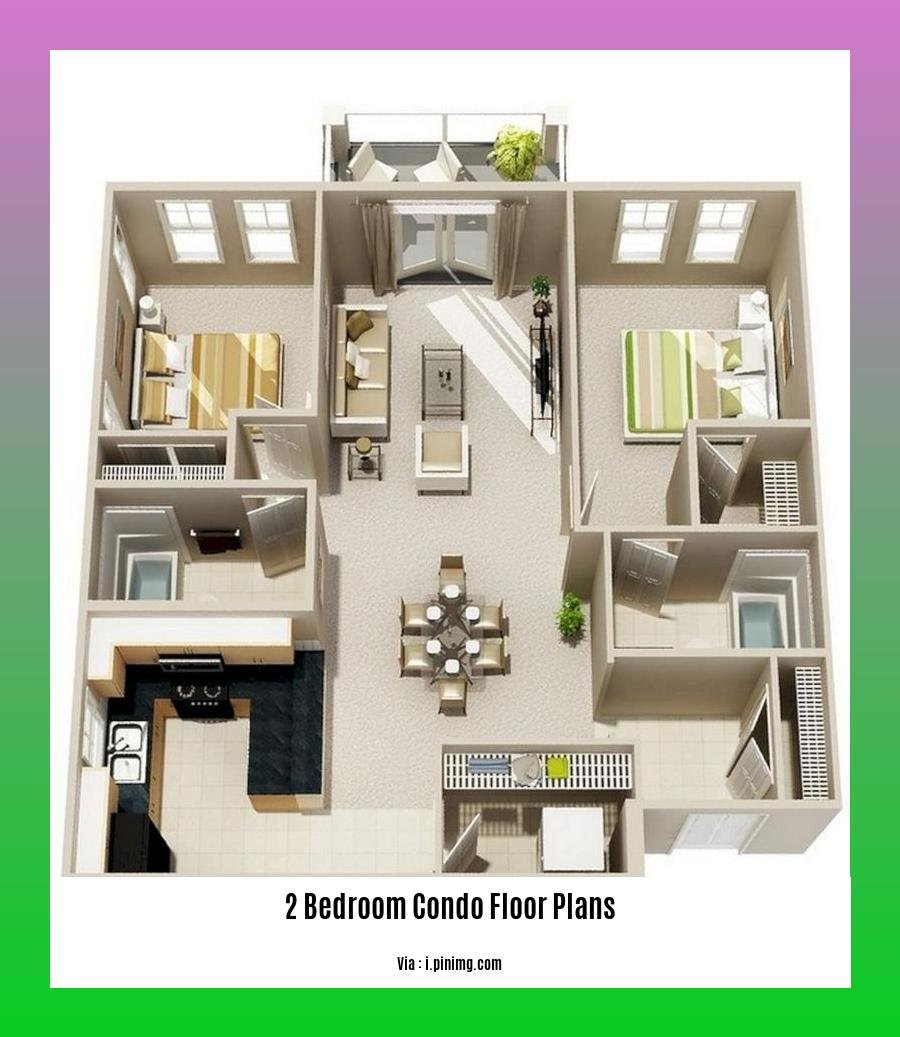
Every two-bedroom condo comes with its own set of spatial challenges. The typical layout usually features a kitchen, dining area, living room, two bedrooms, and one or two bathrooms. But what makes each floor plan unique is how these elements are arranged. Some layouts put the bedrooms side-by-side, while others position them with the master suite separated from the guest room. You might find a narrow hallway connecting rooms, or perhaps an open-concept living area that blends into the kitchen. Understanding these limitations early on helps you determine if a particular unit will truly work for your needs.
Consider the average size of two-bedroom condos. Many range from 700 to 1,200 square feet. That's not much space to work with, especially when you factor in furniture placement, movement paths, and the need for privacy. A well-designed floor plan can make the most of every inch, turning potential problems into clever solutions.
Essential Layout Considerations
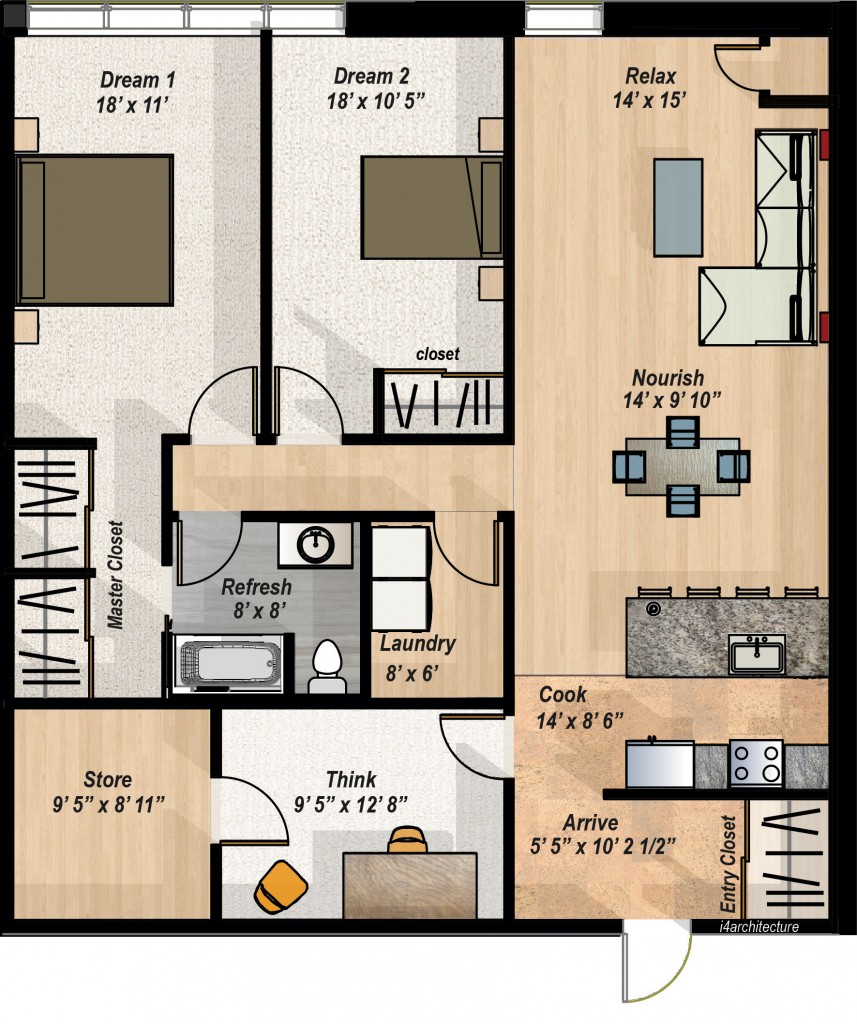
Before diving into design details, consider several fundamental factors:
These considerations form the foundation of any successful floor plan, regardless of the specific dimensions.
Common Floor Plan Configurations
There are several standard configurations for two-bedroom condos that you'll encounter regularly. Each has pros and cons depending on your lifestyle preferences.
Configuration 1: Traditional Layout This classic setup places both bedrooms on one side of the apartment, typically with the bathroom in between or near the entrance. The living area and kitchen are usually centralized. It's easy to navigate and provides clear separation between private and public spaces. However, it can sometimes feel rigid and less flexible for modern living.
Configuration 2: Open Concept Style Many newer condos feature an open-plan approach where the kitchen, dining, and living areas blend together. This creates a sense of spaciousness and allows for better social interaction. The challenge lies in maintaining privacy for bedrooms and managing noise levels.
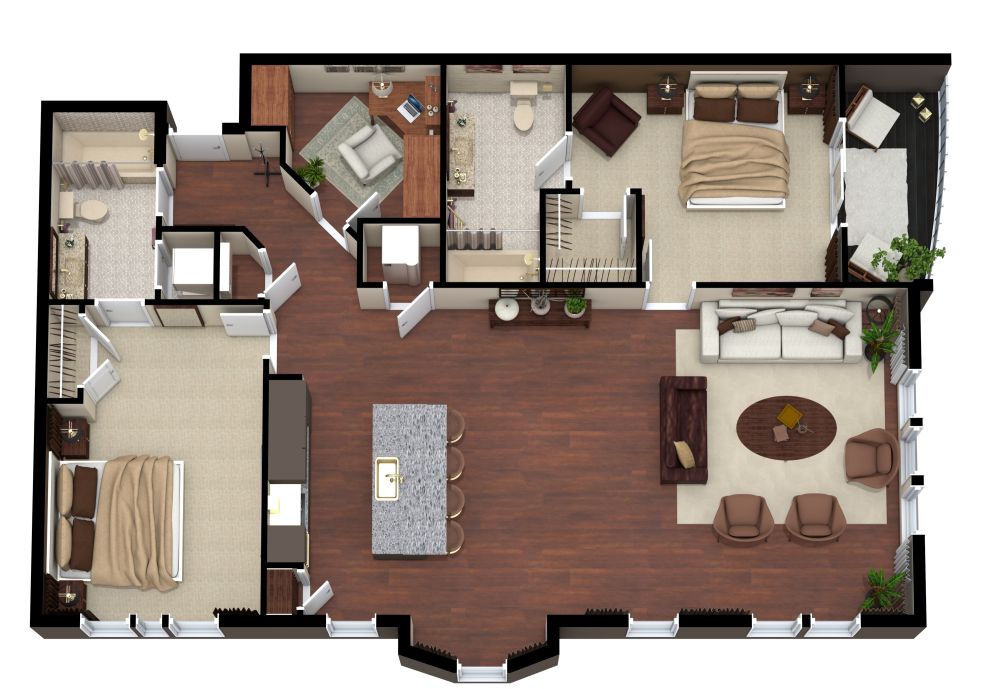
Configuration 3: Master Suite Plus Guest Room In this arrangement, one bedroom is larger and often includes an en-suite bathroom, while the second bedroom is smaller and shares a bathroom with the rest of the home. This works well for couples or families where one person needs more personal space.
Configuration 4: Studio Conversion Some condos convert former studio units into two-bedroom layouts by adding walls or partitions. While this saves money, it can result in awkward angles and difficult furniture placement.
Maximizing Storage Solutions
Storage is often the biggest challenge in two-bedroom condos. Every inch counts, especially when you're trying to fit everything you need. Here are some effective approaches:
Remember, good storage isn't just about hiding things away - it's about making your life easier and keeping your space organized.
Smart Design Choices for Compact Living
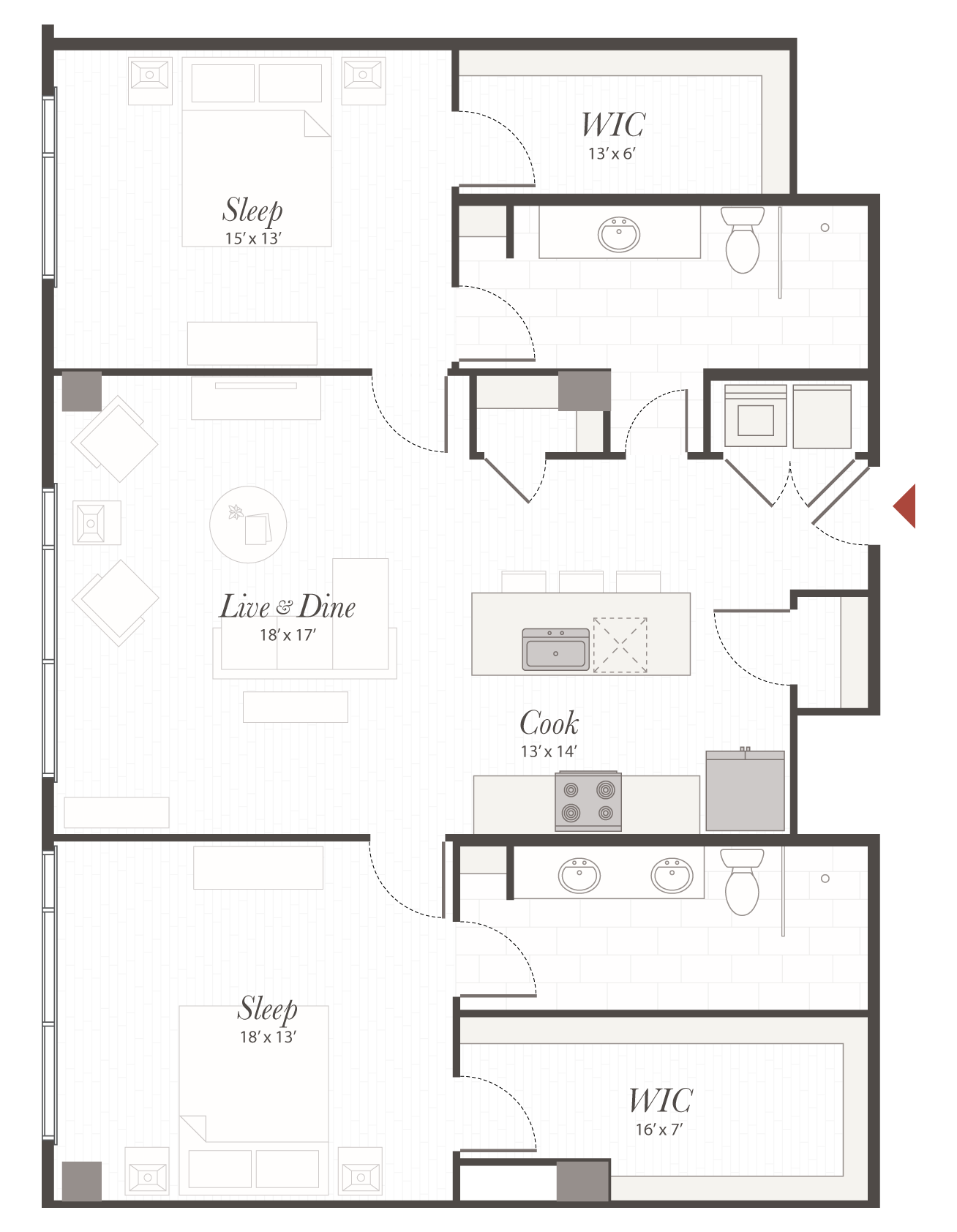
Designing a two-bedroom condo requires thinking beyond simple decoration. It's about creating smart solutions that enhance functionality and comfort.
One powerful strategy is to use visual tricks to make small spaces appear larger. Light colors on walls and ceilings, mirrors strategically placed to reflect light, and minimalist decor all contribute to this effect. But beyond appearance, practical changes can make a real difference.
Consider the importance of flexible spaces. A dining table that folds away during the day, a sofa bed that doubles as a guest room, or a Murphy bed that retracts into the wall are all examples of innovative design that maximizes utility. These aren't just trendy additions - they're smart responses to limited space.
Another key element is choosing furniture carefully. Measure twice before buying anything. Scale matters enormously in small spaces. A large sectional might overwhelm a small living room, while a smaller sofa with clean lines can make the same space feel more open. Similarly, avoid bulky items that block pathways or make movement difficult.
Making Your Space Feel Personal
While the physical layout determines what's possible, your personal touches define what your condo feels like. Creating a space that reflects your personality and supports your lifestyle is crucial.
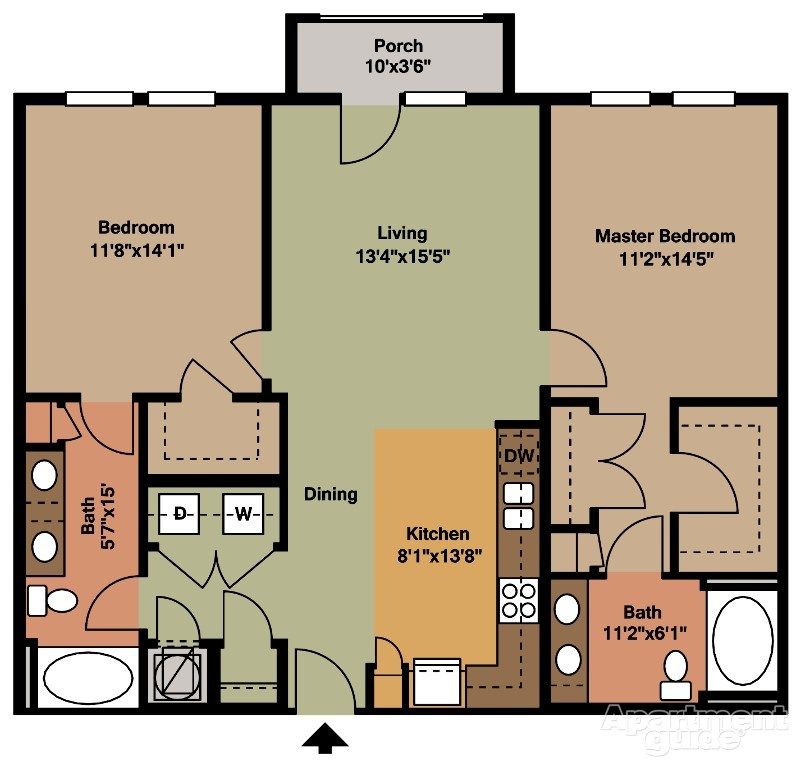
Start by identifying what activities are most important to you. Do you entertain frequently? Then your living area needs to accommodate guests comfortably. Are you a home cook? Your kitchen should feel inviting and functional. Do you work from home? You'll want a dedicated space that promotes productivity.
Color schemes play a major role in setting the mood. Cool tones like blues and grays can create a calming atmosphere, while warmer hues like yellows and oranges bring energy. But remember that too much color can make small spaces feel cramped. Sometimes, a few accent colors in accessories can be more effective than overwhelming paint choices.
Adding plants brings life and freshness to any room. Even small succulents or low-light plants can brighten dark corners and improve air quality. Artwork and photographs create personal connections to your space. Display items that tell your story or bring you joy.
Finally, consider how you want to use your outdoor space if available. Balconies, patios, or shared courtyards can become extensions of your indoor living areas, providing additional relaxation and entertainment options.
Real-Life Examples and Practical Tips
To better understand how these principles apply in practice, let's look at some real-world scenarios:
Case Study 1: Urban Professional Couple A young couple with careers in downtown office buildings might prioritize a layout that includes a home office and efficient kitchen. They'd likely prefer a configuration where the master bedroom offers privacy from the rest of the home, with a compact but well-equipped kitchen that allows for quick meals and entertaining.
Case Study 2: Growing Family For a family with children, the focus shifts toward flexibility and safety. They might prefer a layout with a larger bedroom for a child, perhaps with a built-in desk area for homework. The living space becomes central for family activities, and storage solutions must account for toys, books, and clothing.
Case Study 3: Empty Nesters Retired individuals often seek a layout that emphasizes comfort and accessibility. They might prefer a ground-floor unit with no stairs, a master suite with easy access to a bathroom, and perhaps a small den or library space for reading and quiet time.
Practical tips for buyers include bringing a tape measure to viewings, taking photos to compare layouts later, and asking about future renovations or building improvements that might affect the space. Also, consider the resale value - some layouts are more appealing to future buyers than others.
Future-Proofing Your Condo Layout
Thinking ahead is essential when selecting a two-bedroom condo. What happens when your needs change? Will your current layout still work in five or ten years?
Consider how your lifestyle might evolve. Are you planning for children? Career changes that require remote work? Health considerations that might impact mobility? These factors influence whether a particular floor plan remains suitable over time.
Modular designs offer flexibility. Look for units where walls can potentially be moved or where furniture can easily be rearranged. Flexible spaces that can adapt to different uses are increasingly valuable.
Also think about technology integration. As our lives become more digital, having spaces designed for electronics, charging stations, and connectivity becomes important. Consider where you might place a home office, entertainment center, or smart home devices.
The best two-bedroom condo floor plans are those that can grow with you, accommodating changes in family size, work patterns, and personal preferences without requiring major renovations or costly modifications.
Designing your ideal two-bedroom condo involves balancing practical needs with creative solutions. Every layout presents unique opportunities and challenges, but with careful thought and smart planning, you can create a space that feels both comfortable and functional. Remember that the best floor plan isn't necessarily the largest one - it's the one that fits your life and supports your daily routines. Take time to evaluate how you actually live, what you need most, and what makes you happy in your home. Your two-bedroom condo should be more than just a place to sleep and eat - it should be a reflection of who you are and how you want to live. Whether you're drawn to traditional layouts or modern innovations, the key is finding a balance that works for your specific situation. With attention to detail and a thoughtful approach, your two-bedroom condo can become a true sanctuary.


