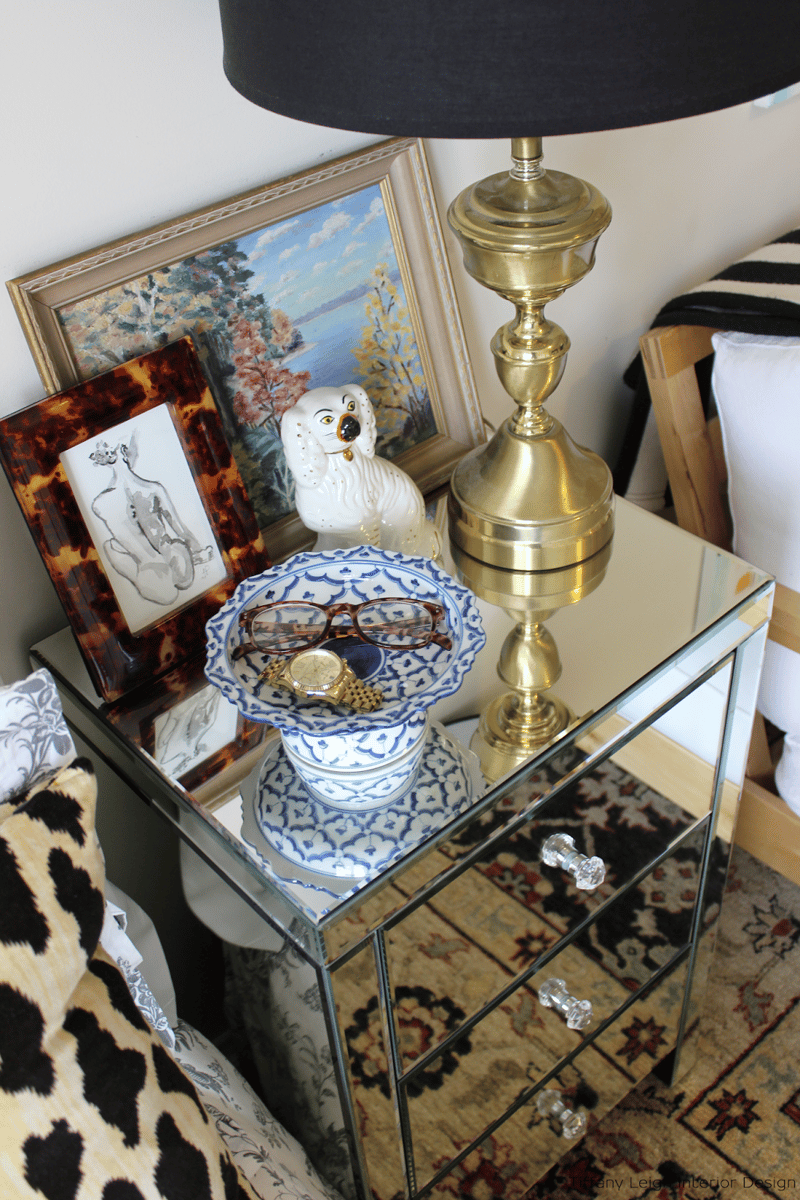
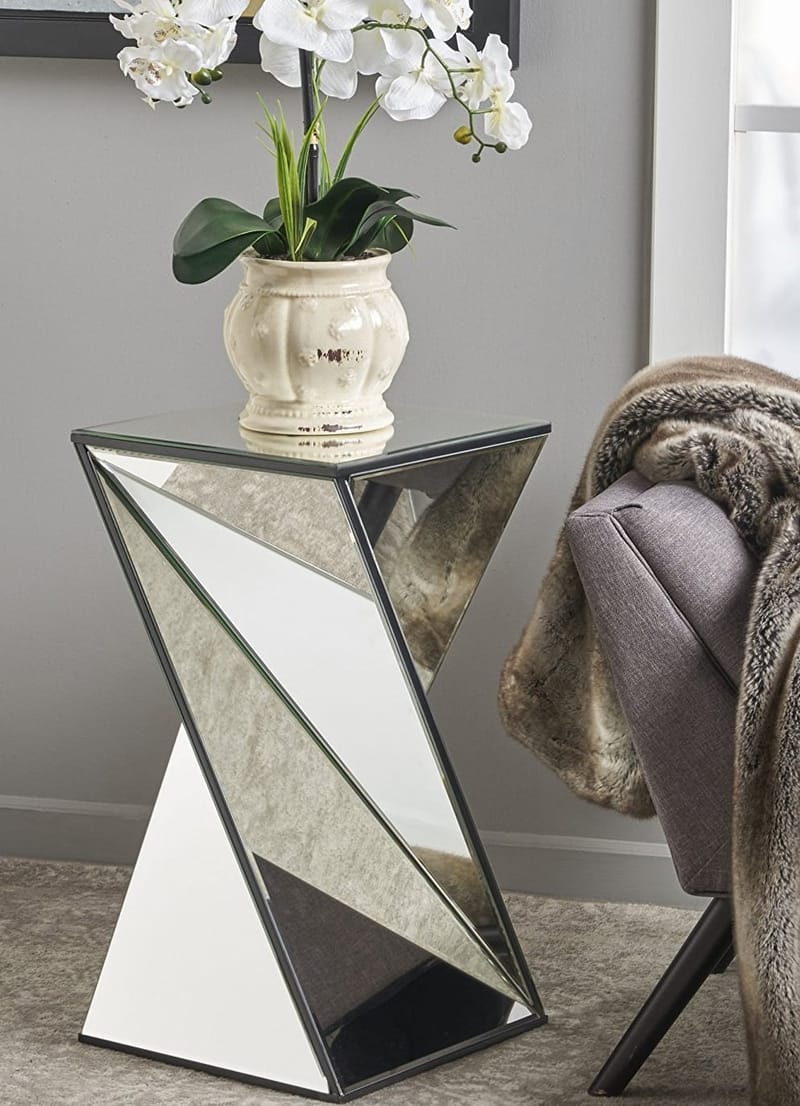
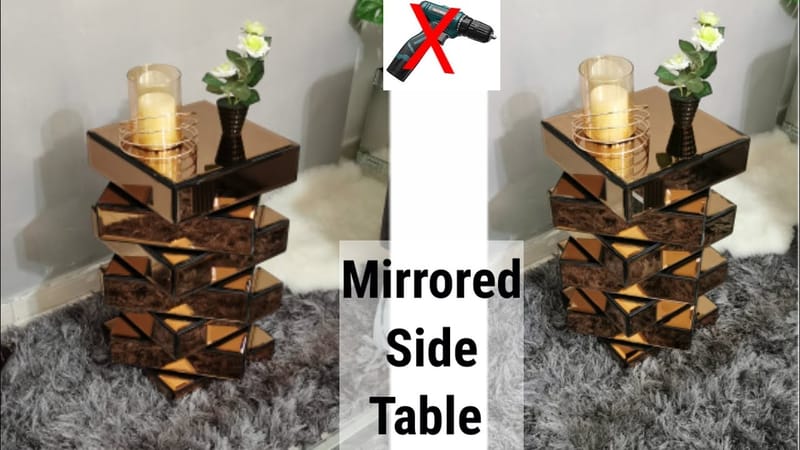
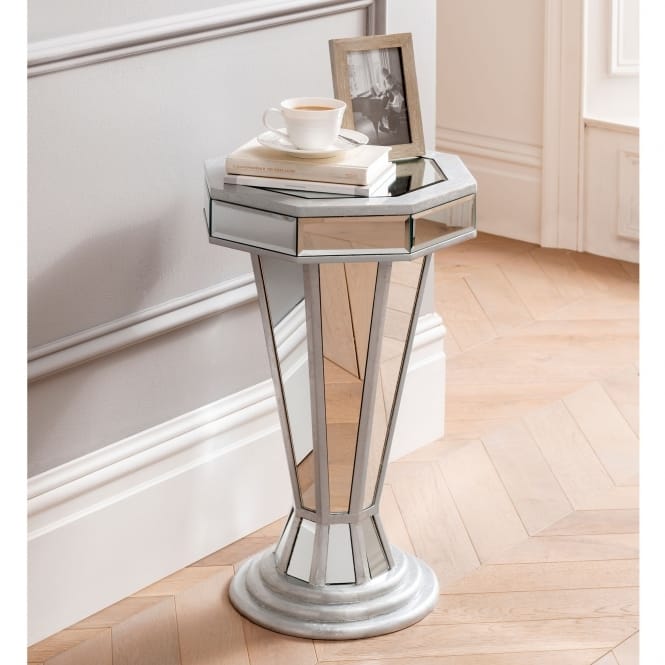
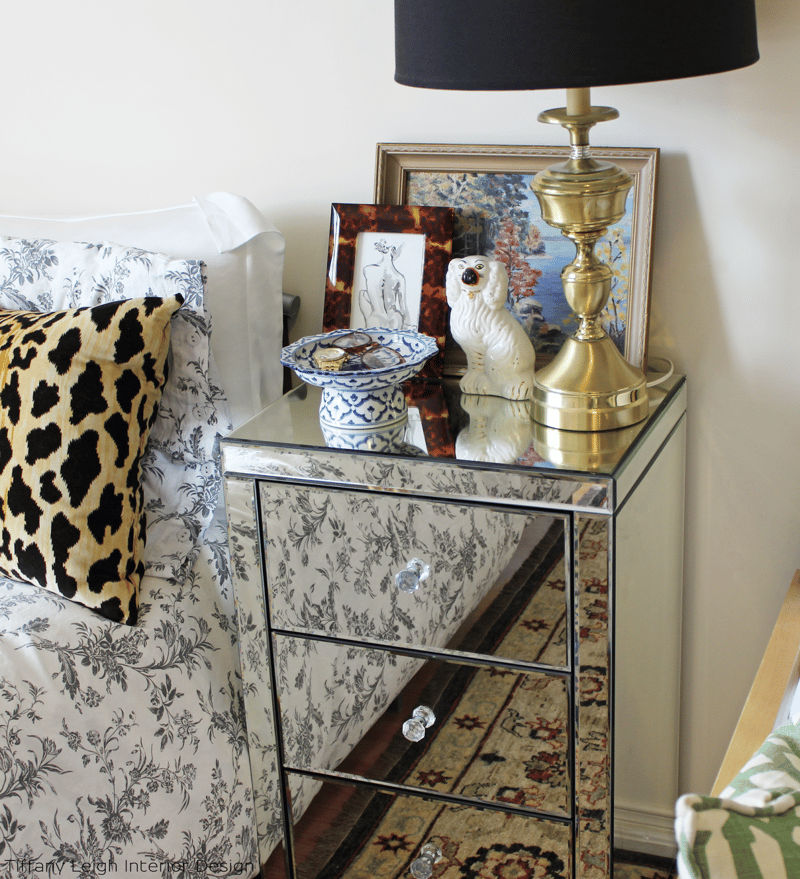
Have you ever paused to truly appreciate the gleam of a mirrored side table, its surface shimmering and reflecting the world around it? It's more than just a piece of furniture; it's a carefully orchestrated symphony of design, materials, and meticulous craftsmanship. As someone who has spent decades immersed in the world of bespoke furniture, I can tell you, the journey from a vague idea to a brilliant, finished mirrored table is nothing short of fascinating. It's a tale of precision, patience, and a little bit of magic.
Mirrored furniture holds a unique place in interior design. It possesses an almost alchemical quality, expanding spaces, amplifying light, and adding a touch of glamour that few other materials can rival. But what goes into making one of these captivating objects? It's not as simple as sticking some mirrors onto a box. Oh no. It involves a deep understanding of materials, an eye for proportion, and a hands-on approach that transforms raw components into a stunning focal point. We're going to pull back the curtain and explore the entire process, from that initial spark of an idea to the final, dazzling product.
Conception and Conceptualization: The Spark of an Idea
Every great piece of furniture begins with an idea, a whisper of inspiration. For a mirrored side table, this often starts with a client's need, a designer's vision, or even an intriguing architectural detail. The first step is to translate that abstract concept into something tangible – a blueprint. This isn't just about drawing pretty pictures; it's about detailed technical drawings, considering dimensions, scale, and the table's intended function. Is it for a grand living room or a cozy bedroom nook? Will it hold a lamp and books, or simply serve as a decorative accent? These questions guide the initial design process. We use CAD software, of course, but there's still something irreplaceable about a hand-sketched detail, capturing the essence of the piece. It’s where the human touch truly begins to shape the future object. Sometimes, a design will go through several iterations, each one refining the form and ensuring both aesthetic appeal and structural integrity.
Material Selection: Beyond Just Glass
While the star of the show is undoubtedly the mirror, the underlying structure is equally crucial. The longevity and stability of the table depend on the quality of the materials chosen. Typically, the frame of a mirrored side table is constructed from robust, stable woods like MDF (Medium-Density Fiberboard) or plywood, sometimes even solid hardwood for premium pieces. These materials provide a smooth, consistent surface for the mirror panels to adhere to, and they resist warping and movement over time. The mirrors themselves require careful selection. We're not just grabbing any old mirror; we're looking for high-quality, distortion-free glass, often with a beveled edge for that extra touch of sophistication. The thickness of the glass is also important, ensuring durability and safety. And let’s not forget the adhesives – specialized glues that create a powerful, lasting bond between the mirror and its substrate, capable of withstanding environmental changes without degradation.
Precision Cutting and Framing: The Foundation
Once the designs are finalized and materials selected, the real cutting begins. This phase demands extreme precision. The wooden or MDF panels are cut to exact specifications using high-tech CNC (Computer Numerical Control) machines, ensuring every piece fits together perfectly. Think of it like building a very precise puzzle. Any slight miscalculation here will throw off the entire assembly. After the primary panels are cut, they are meticulously assembled to form the table's frame. This often involves dowels, screws, and strong wood glues, creating a rigid and stable structure. This is the skeleton upon which the reflective skin will be applied. It's a crucial, often unseen, part of the process, and one where even a small error can compromise the whole project. We also consider how the mirror panels will eventually be attached, sometimes incorporating rebates or recessed areas to ensure a flush, seamless finish.
Mirror Application: The Reflective Skin
This is where the magic truly starts to happen, transforming a plain wooden frame into a shimmering objet d'art. Each mirror panel, already cut to precise dimensions and often given a beautiful beveled edge, is carefully affixed to the prepared frame. This isn't just a quick dab of glue. It involves specialized, high-strength adhesives that are applied evenly and meticulously. The trick is to ensure a completely smooth application, free of air bubbles or imperfections that could show through the mirror. Each panel must be perfectly aligned, edge to edge, to create a seamless, continuous reflective surface. It's an exacting process that requires a steady hand, a keen eye, and a lot of patience. Any misplacement here can ruin the entire aesthetic and require painstaking rework. Often, temporary clamps or weights are used to hold the mirrors firmly in place while the adhesive cures, ensuring a strong, lasting bond.
Finishing Touches and Quality Control: The Brilliance Unveiled
With the mirrors in place, the table begins to take on its final form, but the journey isn't over. The next steps involve the crucial finishing touches. This might include applying a backing to the table, ensuring the exposed wooden surfaces are sealed and protected, and any hardware, like drawer pulls or casters, are securely attached. Then comes the rigorous quality control. Every inch of the mirrored surface is inspected for flaws – scratches, chips, or imperfections in the glass or adhesive. The table's stability is tested, and all joints are checked for robustness. Any smudges or fingerprints are meticulously cleaned away, leaving a pristine, brilliant surface. This final stage is where the table truly transitions from a manufactured item to a piece of furniture ready to grace a home, reflecting its surroundings with stunning clarity. It’s about making sure that the table not only looks good but also functions flawlessly and will stand the test of time.
Packaging and Delivery: Safeguarding the Shine
The final, and often overlooked, stage is packaging and delivery. A mirrored side table, due to its delicate nature, requires exceptional care during transit. Specialized packaging, often involving custom-fit foam inserts, sturdy cardboard boxes, and sometimes even wooden crates, is used to protect the table from bumps, vibrations, and temperature changes. The goal is to ensure that the table arrives at its destination in the same pristine condition it left the workshop. This isn't just about preventing breakage; it's about preserving the flawless finish and the integrity of the design. A damaged table, no matter how beautifully crafted, is a disappointment. So, careful handling and thoughtful packaging are the last, yet vital, steps in bringing a mirrored side table from blueprint to brilliance, ready to become a cherished part of someone's living space. It’s the final act in a complex, rewarding production.
The creation of a mirrored side table is a testament to the blend of artistry and engineering. From the initial conceptual sketch to the final, gleaming product, each step requires precision, expertise, and a deep appreciation for the materials involved. It's a process that transforms raw components into a functional piece of art, capable of enhancing any interior with its reflective charm and elegant presence. So, the next time you see a mirrored side table, take a moment to appreciate the intricate journey it undertook – from a simple blueprint to a brilliant, dazzling reality. It’s more than just furniture; it’s a reflection of human ingenuity and dedication. And that, my friends, is truly something special.